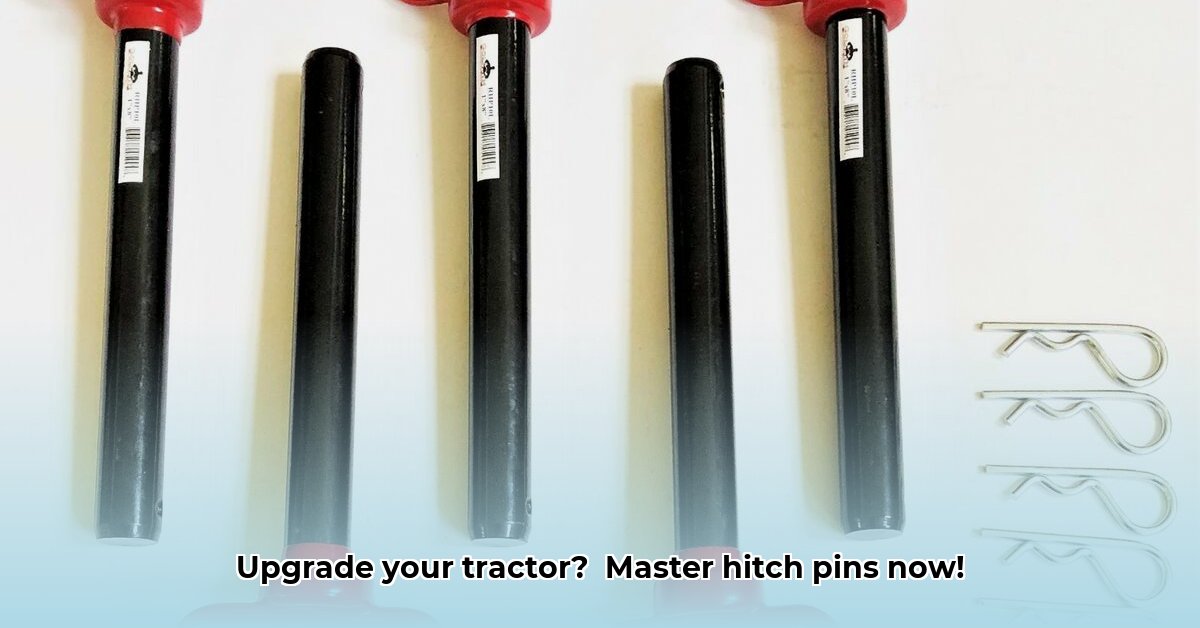
Understanding Hitch Pins: The Foundation of Efficient Farming
Hitch pins – small parts, big impact. These seemingly insignificant components are the unsung heroes connecting your tractor's implements, ensuring smooth operation and efficient workflow. But their role extends far beyond simple functionality. Choosing the right hitch pins directly influences your farm's sustainability, impacting fuel consumption, soil health, and overall resource management. This guide provides a practical, step-by-step approach to selecting, installing, and maintaining hitch pins for optimal performance and environmental responsibility. For more information on tractor supply hitch pins, check out this helpful resource.
Types of Hitch Pins: Matching the Pin to the Task
Several hitch pin types cater to various needs and implement types. Let's explore the most common:
Clevis Pins: Simple, robust, and widely available, these pins are suitable for general-purpose implements. (A basic, loop-ended pin for straightforward connections.)
Ball Hitch Pins: Offering increased flexibility, these pins allow for a wider range of motion, ideal for implements requiring articulation. (A ball-shaped head allows for greater movement.)
Spring-Loaded Pins: Providing enhanced safety, these pins include a spring mechanism preventing accidental release, especially critical when working with heavy implements. (A built-in spring ensures a secure connection.)
Locking Hitch Pins: Designed for applications demanding superior security, these pins incorporate a locking mechanism preventing dislodgement, even under stressful conditions. (A secondary locking mechanism prevents accidental disengagement.)
The material also significantly impacts durability and lifespan. Hardened steel pins offer superior strength and longevity, minimizing the need for replacements, whereas cheaper alternatives may require more frequent replacements, contributing to increased waste. The long-term cost savings and reduced environmental impact associated with durable, high-quality pins make them a worthwhile investment.
Selecting the Right Hitch Pin: A Practical Framework
Choosing the correct hitch pin depends on several key factors:
Implement Type: Consult your implement's manual to determine the recommended pin size and strength. Heavier implements necessitate stronger pins.
Soil Conditions: Rocky or heavy clay soils exert greater stress on hitch pins. Choosing a stronger, more robust pin is crucial to prevent bending or breakage.
Operational Requirements: Frequent use demands durable pins capable of withstanding repeated stress. Investing in high-quality pins minimizes downtime and replacement costs.
Safety Considerations: For heavy implements or operations on slopes, prioritize safety pins with locking mechanisms to prevent accidental disengagement.
Proper Installation and Maintenance: Extending Hitch Pin Lifespan
Correct installation and routine maintenance are paramount in extending the life of your hitch pins and ensuring operational safety.
Pre-Use Inspection: Before each use, visually inspect all pins for signs of wear, bending, or cracks. Replace any damaged pins immediately to prevent potential failures and accidents.
Safe Insertion: Use appropriate tools to insert pins, ensuring full seating and locking. Never force a pin into place, as this can lead to damage.
Periodic Lubrication: Applying a suitable lubricant (grease) reduces friction and wear, extending the pins’ lifespan and maintaining smooth operation.
Regular Cleaning: Keep pins clean and free of dirt and debris to prevent corrosion and premature wear.
Troubleshooting Common Hitch Pin Problems
Even with proper care, issues can occur. Addressing these promptly prevents further damage or downtime.
Pin Shearing: This indicates overload. Reduce the load on the implement or use a stronger pin.
Pin Bending: Suggests excessive stress. Check implement alignment and load distribution. Replace the bent pin.
Loose Hitch: Verify proper pin seating and locking. Replace the pin if the locking mechanism is faulty.
Sustainability: The Environmental Impact of Hitch Pin Selection
The seemingly small act of choosing hitch pins directly affects your farm’s sustainability:
Reduced Waste: Durable pins minimize replacements, reducing waste and conserving resources. Isn't this a smart choice for a sustainable future, reducing the environmental impact of your agricultural operations?
Enhanced Efficiency: Reliable pins ensure smooth operation, translating to lower fuel consumption and improved productivity. Doesn't smoother operation mean a more productive day?
Lower Soil Compaction: Efficient implement function, facilitated by proper pins, minimizes unnecessary soil compaction, enhancing soil health and long-term productivity. How important is soil health to your farming practices?
Conclusion: Small Parts, Big Impact on Sustainable Farming
Selecting and maintaining hitch pins is a simple yet profoundly impactful step toward sustainable agriculture. Prioritizing durable, high-quality pins minimizes waste, enhances efficiency, and contributes to a healthier environment. By making informed decisions about seemingly minor components, you are investing in the long-term success and sustainability of your farm. Remember, responsible farming begins with attention to every detail.